A few years ago, if someone told me they were venting to a chatbot about their problems, it would’ve made me clutch my pearls and go, “Oh, bless your heart.” But fast forward to today, and here we are: AI-driven mental health apps everywhere!
We have chatbot counselors, virtual “friends,” and AI-driven therapy apps all promising to lend a listening ear.
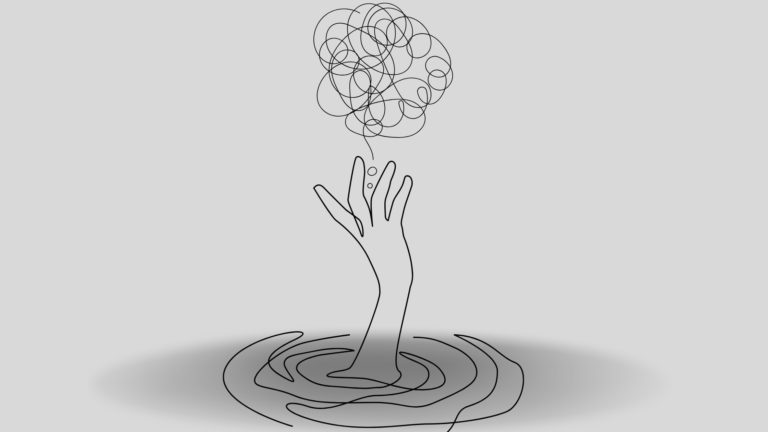
But let’s pause here for a moment and really think:
- Is this genuinely a good thing for our well-being?
- Are chatbots simply providing an illusion of connection?
- Are they just making us more isolated than ever?
- Are we simply fooling ourselves into thinking an algorithm truly understands us?
Innovation or Illusion? Why Are We Turning To The AI Bots?
To be completely fair, access to mental health care is a privilege that not everyone has.
Therapy is expensive. Waiting lists can feel endless, and the persistent stigma still prevents many people from seeking help.
This is where the AI-powered chatbot makes its grand entrance.
A quick scroll through the app store and you’ll find dozens of mental health chatbots claiming to help with stress, anxiety, and even depression.
And it’s quite attractive, because:
- They claim to be available 24/7.
- They certainly don’t judge you.
- They won’t hit you with the dreaded, “Have you tried meditation?” (unless you ask!).
- And they don’t come with a hefty price tag.
Therefore, in theory, it sounds like the perfect, accessible solution.
To supplement this further, countless studies show that a key motivation behind the adoption of these tools is accessibility.
One study found that chatbots can improve access to mental health support for people who might not otherwise seek help. This is because these bots make therapy-like conversations more readily available. At the same time, it reduces the barriers of time, cost, and fear.
In fact, a study published in JMIR Mental Health noted that conversational agents like these AI Bots can provide immediate, low-threshold emotional assistance, particularly for those hesitant to reach out in person.
So who wouldn’t want this kind of accessible help when they need it, right?
But that’s just the point! Even with that being said, it is so important to understand that accessibility doesn’t mean that it is automatically equal to safety.
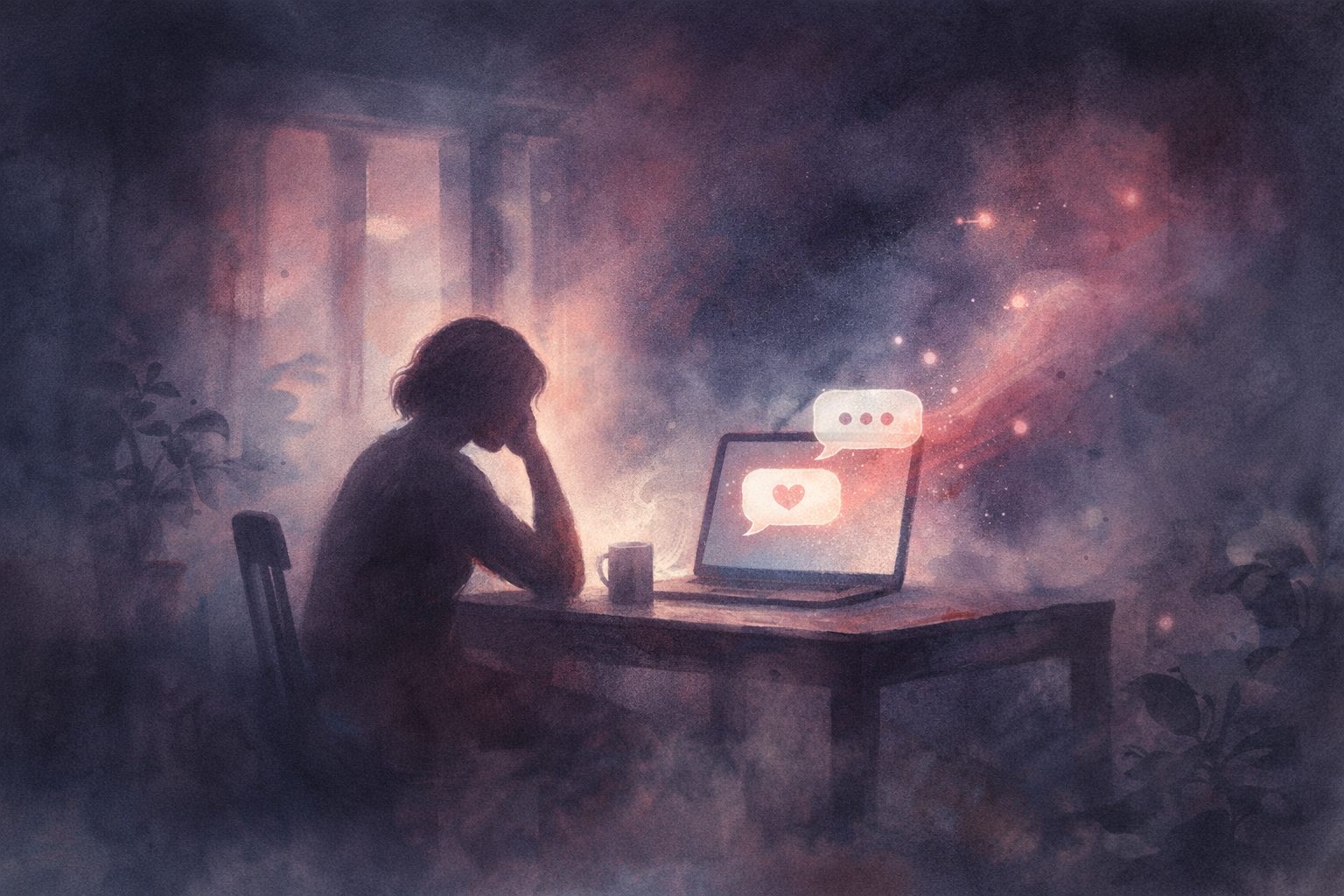
And I find it so utterly devastating that we, as a society, have come to a point where it’s easier to type “I’m struggling” to a bot than to say those words to an actual human being.
The Empathy Gap: Where AI Falls Short
While chatbots can process text and respond, they fundamentally don’t actually understand what it means to feel the weight of a heartbreak, or the crushing grip of anxiety, or the deep ache of sadness.
How could it?
Scientists researching this very topic often arrive at the same conclusion: while AI can retrieve information and reason logically, it doesn’t feel anything.
There’s a massive difference between a chatbot responding with a well-coded, “That sounds difficult, how can I help?” and a human therapist picking up on the subtle tremor in your voice, the hesitation in your words, or the exhaustion in your posture.
Because real human empathy goes beyond the words you exchange. It comes from connection and shared experience, and that’s what makes you feel truly understood and heard.
The Risk of Emotional Isolation
The American Psychological Association (APA) has pointed out a growing concern: people, especially teenagers, are turning to AI chatbots as their primary source of emotional support.
We can all agree that AI is definitely a smart and helpful tool, but even with everything that it offers, it is unequivocally NOT a worthy substitute for human connection.
In fact, over-relying on AI can often leave you feeling more lonely than when you started because they:
- Are always available, anywhere, anytime.
- Don’t require any emotional effort in return.
- Never challenge you in the way a real friend or therapist might.
When you lean heavily on a zero-effort relationship, reaching out to a fellow human can start to feel like just too much work.
While real relationships require patience, vulnerability, and sometimes even discomfort, AI bots offers comfort without complexity and responses without responsibility.
Eventually, it makes real conversations with real humans feel unnecessary, or worse, exhausting.
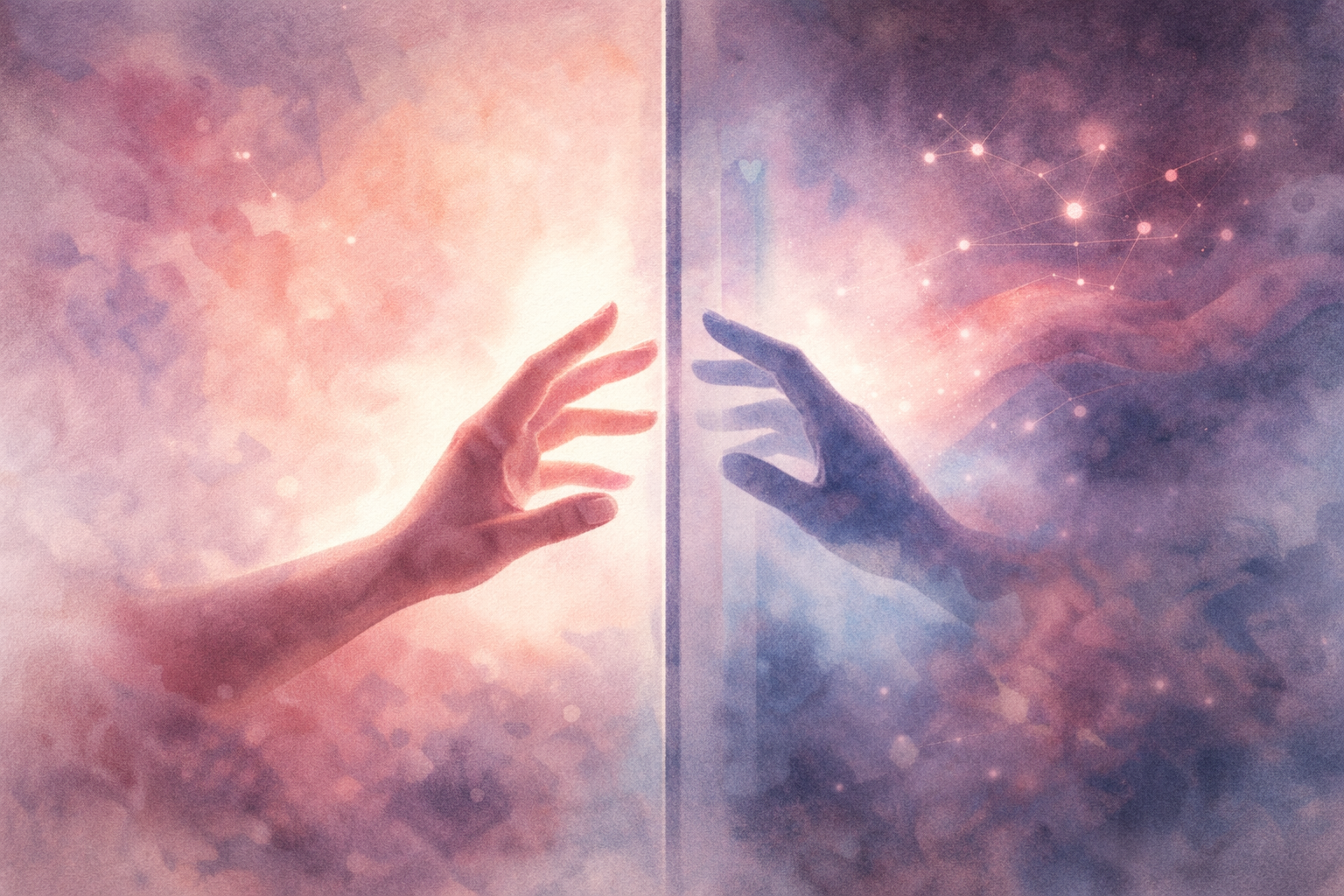
On the surface level, you may feel like you’re being supported, but what you’re really experiencing is a simulation of closeness, not the closeness itself.
Chatbots are great at mirroring your words back to you, but they cannot truly sit with you in your pain, know you deeply, or grow alongside you the way you do in a real relationship.
And when emotional support becomes something automated, the messy, imperfect, deeply human parts of connection can start to feel optional even though they are often the very things that help us heal.
The Misinformation Problem
And beyond isolation, there’s the danger of misinformation. Chatbots are designed to respond quickly and confidently, but confidence doesn’t mean it is always correct, especially when it comes to mental health.
There have been concerning reports of chatbots dishing out advice that’s not just unhelpful, but potentially harmful to users in distress. In 2023, the American Psychological Association also warned that AI tools used for mental health may produce inaccurate or misleading responses, particularly in high-risk situations, because they are not held to the same standards as licensed professionals.
Someone reaching out during a panic attack, a depressive episode, or a moment of crisis doesn’t need a generic, vague, or misguided suggestion. They need care, nuance, and more often than not, professional intervention. These are things that AI simply cannot fully provide.
The problem is that chatbots don’t truly understand context the way humans do. They don’t know a person’s history, emotional state, or risk level.
They can miss red flags, oversimplify serious issues, or even unintentionally validate unhealthy thoughts. And in vulnerable moments, even a small piece of wrong advice can be deeply impactful.
What makes this especially dangerous is how believable these systems can sound. When someone is struggling, they may take the chatbot’s response as trustworthy guidance, even when it’s inaccurate or inappropriate. And over time, this can lead people to rely on AI as a substitute for real mental health support, which it was never meant to replace.
So when misinformation enters the picture, the stakes become much higher than just “bad advice.”
A Band-Aid, Not a Cure
To be clear, AI isn’t inherently harmful. For some people, it can be a helpful starting point like a journaling companion, a grounding tool, or a way to feel a little less alone when you can’t fall sleep at 2 in the morning.
When used thoughtfully, AI can support mental health in small, practical ways.
But it is important to understand that support is not the same as treatment. And convenience is also not the same as care.
- At best, AI is impersonal. It’s a well-worded response without a real presence behind it.
- At worst, it’s a reminder that no matter how advanced it gets, it still doesn’t truly get you. It can simulate empathy, but it cannot offer the depth, care, and accountability that comes with real human connection.
So yes, AI chatbots can be a useful tool. But they should never be replaced with therapy.
Think of them like a band-aid: useful for a small scrape, but not a replacement for actual medical treatment or for the steady and nurturing presence of a human being.
Technology sure is evolving fast, and so is our approach to mental health. But no matter how advanced and sophisticated AI becomes, one thing remains crystal clear: Human connection isn’t a luxury, it’s a fundamental, non-negotiable need and no algorithm, no matter how advanced, can ever truly replace it.